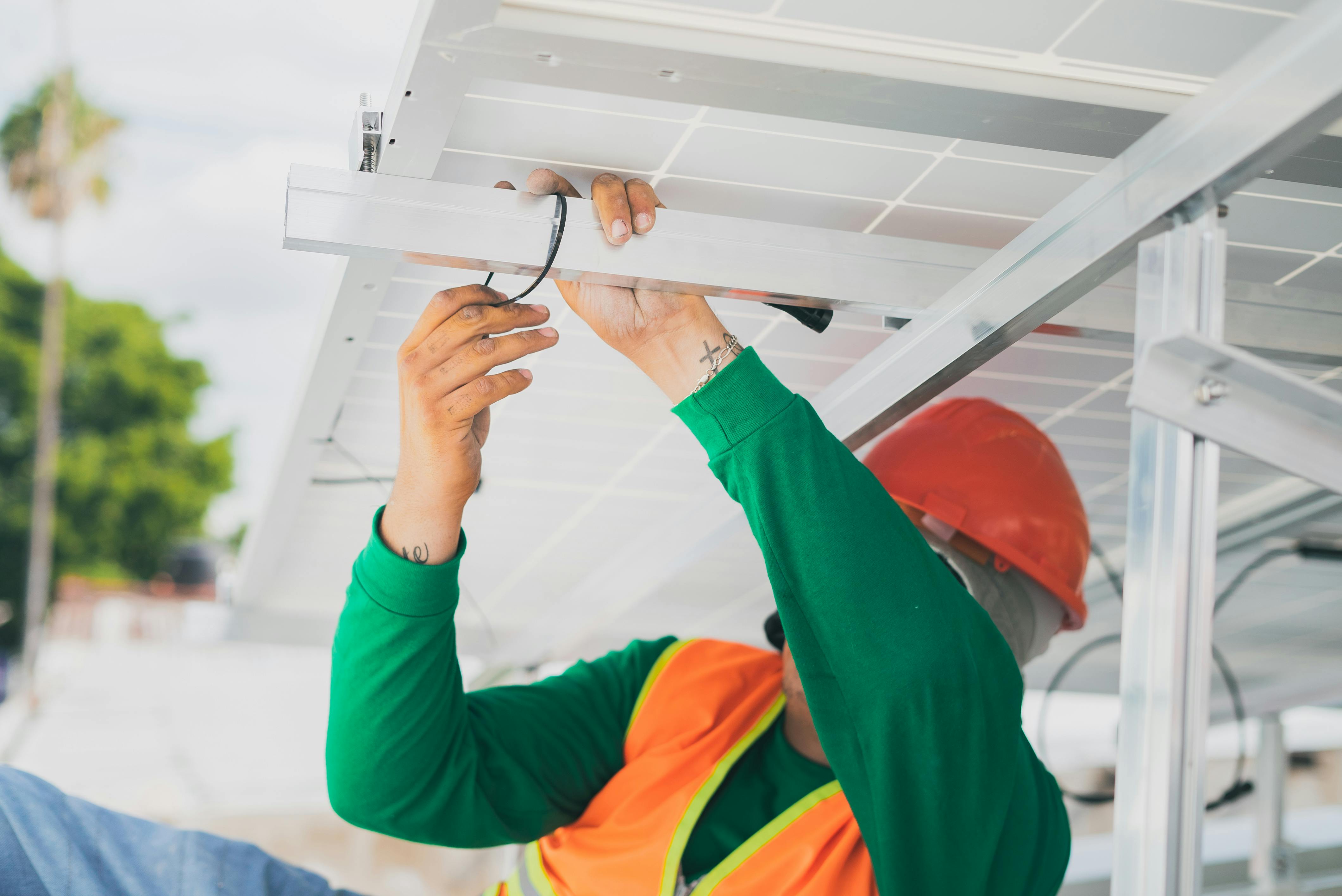
Off-grid solar battery systems are transforming the way remote homes, farms, and small businesses manage energy. By storing excess solar power for use during cloudy periods or after sunset, these systems reduce reliance on diesel generators and the main electricity grid, delivering both environmental and financial benefits. Understanding how to design, install, and maintain an off-grid setup is essential for maximizing efficiency and ensuring long-term reliability.
Key Components of an Off-Grid Solar Battery System
Solar Panels
- Capture sunlight and convert it into direct current (DC) electricity.
- High-efficiency monocrystalline panels deliver more power per square metre.
- Proper orientation and tilt optimize daily energy production.
Battery Bank
- Stores DC electricity for later use; lithium-ion batteries are now the industry standard due to higher depth of discharge and longer cycle life.
- Capacity should be sized to meet nighttime and cloudy-day demand, typically expressed in kilowatt-hours (kWh).
- Battery management systems (BMS) protect against over-charge, deep discharge, and temperature extremes.
Inverter/Charge Controller
- Converts DC from the panels to AC for household appliances.
- Maximum power point tracking (MPPT) controllers increase harvest efficiency by up to 30% compared with traditional PWM controllers.
- Hybrid inverters can seamlessly switch between solar, battery, and generator sources.
Design Strategies for Maximum Efficiency
Effective system design begins with a detailed energy audit. By mapping daily and seasonal consumption patterns, the appropriate panel size and battery capacity can be calculated. Discover expert strategies here.
Optimising Panel Placement
- Orient panels true north (in the Southern Hemisphere) to capture the most sunlight.
- Avoid shading from trees, structures, or neighboring panels.
- Consider adjustable mounting racks for seasonal tilt adjustments.
Battery Sizing and Configuration
- Target a usable capacity of 50-80 % of total battery bank to extend lifespan.
- Configure batteries in series/parallel to match system voltage and desired amp-hour rating.
- Implement temperature-controlled enclosures for colder climates.
Smart Energy Management
- Use load-shifting techniques to run high-consumption appliances during daylight hours.
- Integrate monitoring software that provides real-time data on generation, storage, and consumption.
- Set automated backup generator start-points for extended blackout periods.
Installation Best Practices
Professional installation ensures safety, code compliance, and optimal performance. Key steps include:
- Securely mounting panels on sturdy racking with proper grounding.
- Running conduit and wiring according to local electrical standards.
- Configuring the BMS and inverter settings to match the battery bank’s specifications.
- Performing a comprehensive system test before commissioning.
For region-specific guidance, Learn about our tailored solutions. offers insights into local climate considerations and regulatory requirements.
Maintenance and Longevity
Regular upkeep preserves system efficiency and extends component life:
- Inspect panels for dust, debris, or bird droppings; clean with a soft brush and water.
- Check battery terminals for corrosion and ensure tight connections.
- Review inverter logs quarterly to identify any performance drift.
- Schedule professional BMS firmware updates annually.
When troubleshooting, reference detailed guides that cover common fault codes and corrective actions. Explore advanced guides and tips.
Economic and Environmental Impact
Off-grid solar battery systems deliver measurable savings:
- Reduced fuel costs compared with diesel generators, up to 70 % lower operating expenses.
- Lower carbon emissions; a typical 5 kW system offsets roughly 6 t of CO₂ annually.
- Potential eligibility for government rebates and incentives, further improving return on investment.
Future Trends
Technological advancements are shaping the next generation of off-grid solutions:
- Integration of AI-driven energy forecasting to optimise charging cycles.
- Modular battery designs that allow incremental capacity upgrades.
- Hybrid systems combining solar, wind, and micro-hydro sources for greater resilience.
Staying informed about these developments helps owners maintain a cutting-edge, efficient system that adapts to evolving energy needs.
Conclusion
Maximizing efficiency in an off-grid solar battery system requires careful planning, quality components, and disciplined maintenance. By following proven design principles, leveraging smart management tools, and accessing region-specific expertise, users can achieve reliable, cost-effective, and environmentally responsible power independence. For deeper insight into implementation strategies, Find out more about this approach.